



What is rubber granulate?
- Thomas
- 28. April 2025
Rubber granulate—often referred to as rubber crumb—is a highly versatile material widely used in sports, recreation, construction, and safety flooring. Whether as infill for artificial turf fields, shock-absorbing playground surfacing, or a key ingredient in resilient rubber tiles, rubber granulate has become essential across many industries.
This guide explains what rubber granulate is, how it is produced, where it is used, and why it plays a major role in sustainable material cycles.
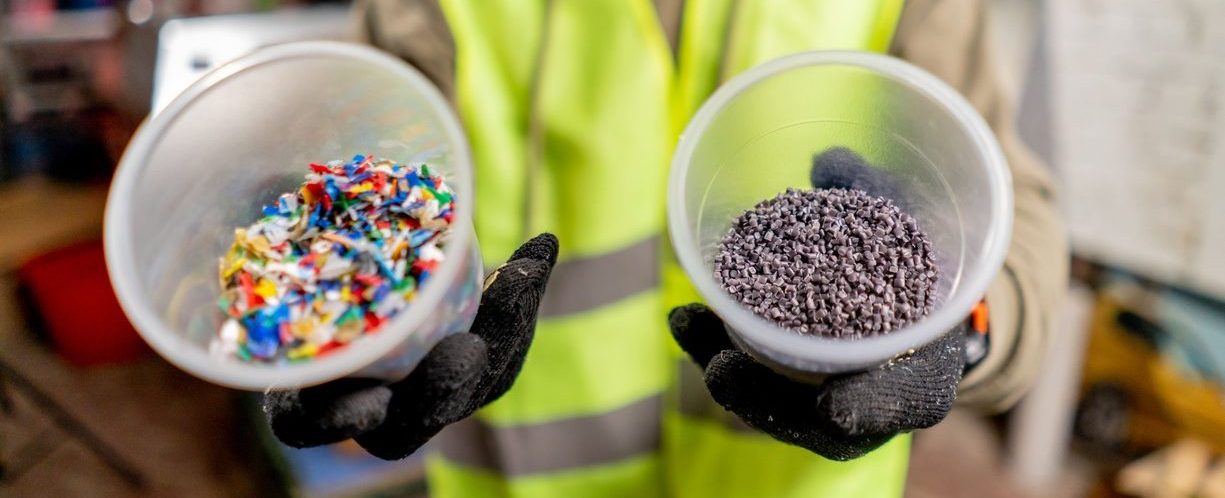
Table of Contents
Definition: What Is Rubber Granulate?
Rubber granulate refers to small, grain-sized pieces of rubber created by mechanically shredding larger rubber products—typically end-of-life tires or industrial rubber waste. The particle size varies depending on the intended application, from fine rubber powder to coarse granules several millimeters in diameter.
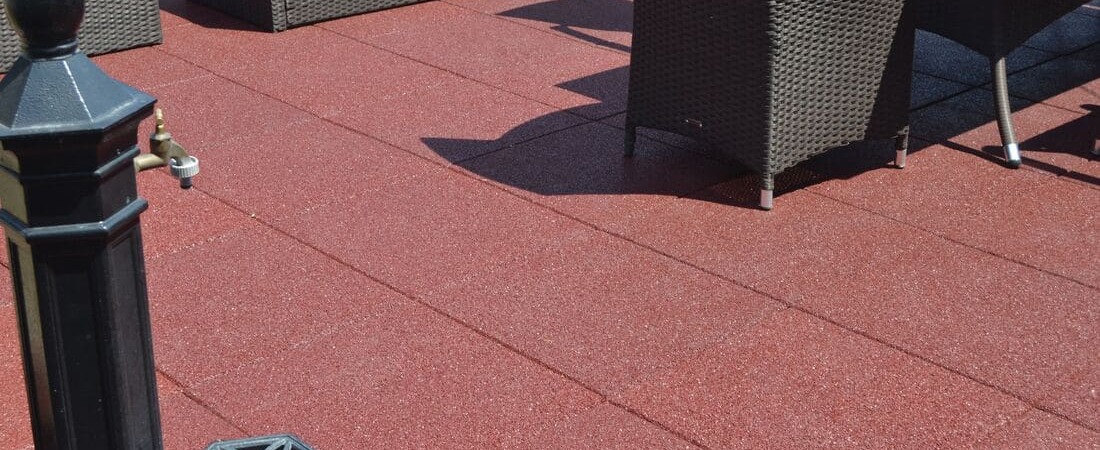
Different colorings and rubber blends depend on the source material and the required performance characteristics. Rubber crumb is often combined with polyurethane binders (PU resin) to manufacture resilient rubber flooring products, such as impact-absorbing playground tiles, sports surfacing, or elastic construction materials.
How Rubber Granulate Is Produced
Producing rubber granulate is a technically precise, multi-step process. While methods may vary—such as ambient grinding or cryogenic techniques—the overall workflow typically includes:
1. Collection of Raw Material
Most commonly, used car and truck tires are collected because they provide a reliable, recyclable source of high-quality rubber. Industrial rubber waste may also be included.
2. Pre-processing
Tires are separated into components:
- Removal of steel
- Removal of textile fibers
- Cleaning and preparation
3. Mechanical Shredding
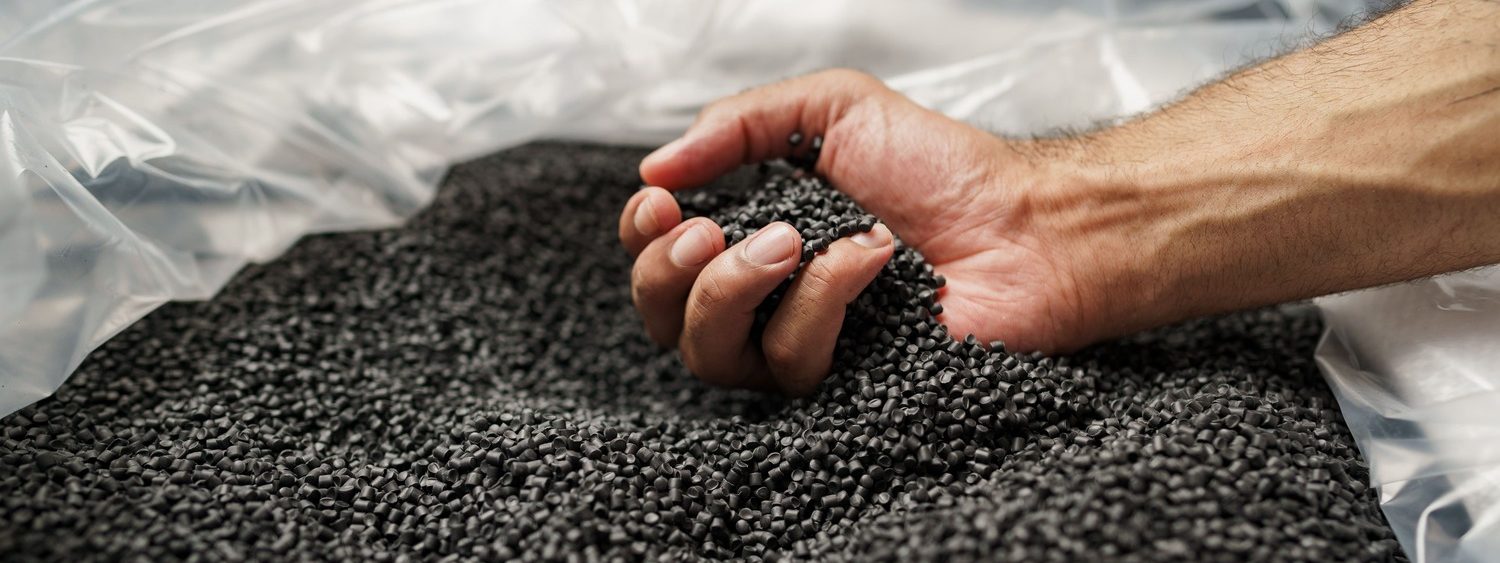
The rubber is cut into progressively smaller particles until the desired granule size is reached. Multiple particle grades are produced—from fine rubber powder to coarse crumb. The sieve curve (grain size distribution) determines how well the material performs in different applications.
4. Screening & Sorting
Granules are screened by size, cleaned, and—depending on their final application—may be:
- colored
- dust-reduced
- mixed with binders
- prepared for molding or extrusion
Application Areas: Where Is Rubber Granulate Used?
Rubber granulate is used across a wide range of industries due to its shock absorption, durability, and elasticity. Here are the most common application areas:
Artificial Turf Fields (Rubber Infill)
Rubber crumb is used as infill between turf fibers to provide:
- elasticity
- cushioning
- consistent ball behavior
- joint-friendly shock absorption
The performance depends on both turf fiber height and granule size.
Playground Surfacing & Fall Protection Systems
On playgrounds, safety is paramount. Rubber granulate is molded into impact-absorbing tiles and poured-in-place surfacing that reduce injury risk by absorbing impact forces—especially under swings, slides, and climbing structures.
Fitness Areas & Outdoor Gyms (Calisthenics Parks)
Rubber granulate flooring is ideal for:
- outdoor fitness spaces
- calisthenics parks
- gym flooring
It provides slip resistance, shock absorption, durability in all weather conditions, and noise reduction.
Running Tracks & Athletic Surfaces
Rubberized running tracks use granulate in poured systems to deliver:
- optimal rebound
- energy return
- controlled shock absorption
- consistent traction
Equestrian Surfaces (Arenas & Stable Flooring)
Rubber granulate enhances:
- elasticity
- traction
- cushioning for horse and rider
It can be used pure or blended with sand or textile fibers.
Construction & Industrial Applications
Rubber crumb is incorporated into:
- asphalt mixes for longer-lasting roads
- acoustic insulation materials
- anti-slip coatings
- vibration-damping products
It is increasingly used as a safer, more elastic alternative to harder construction materials.
Benefits of Rubber Granulate
Rubber granulate offers numerous advantages that make it valuable in many industries:
- Shock absorption
- Slip resistance
- Elasticity and flexibility
- UV & weather resistance
- Durability and long service life
- Versatility across applications
- Recyclability & resource efficiency
These properties make rubber granulate a go-to material for both indoor and outdoor sports and safety surfacing.
Environmental Impact: How Sustainable Is Rubber Granulate?
Rubber granulate supports the circular economy by reusing millions of end-of-life tires and industrial rubber leftovers. Instead of landfilling or incineration, the material is converted into a durable new resource.
While past debates addressed potential contaminants in tire-derived granules, modern production standards and strict regulations ensure today’s materials are safe—especially when used in bonded flooring systems such as playground tiles or sports surfacing.
Recycling rubber significantly reduces waste volume and transforms a long-lasting waste product into long-lasting new applications.
Future Developments
With growing interest in sustainable building materials and increased demand for eco-friendly sports and playground surfaces, the market for rubber granulate will continue to expand. Emerging trends include:
- Improved purification technologies
- Bio-based binding agents
- New rubber-granulate composite materials
- Expansion into agriculture and industrial engineering
Research and development efforts aim to unlock even more applications and further increase the sustainability of recycled rubber products.
Auch interessant