Skip links

Calisthenics

A Growing Fitness Trend for Cities and Municipalities

Classic

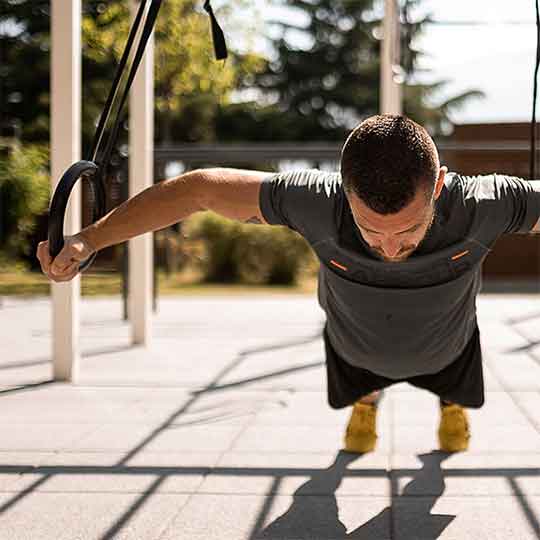
Classic calisthenics focuses primarily on endurance and high-repetition exercises.

Freestyle

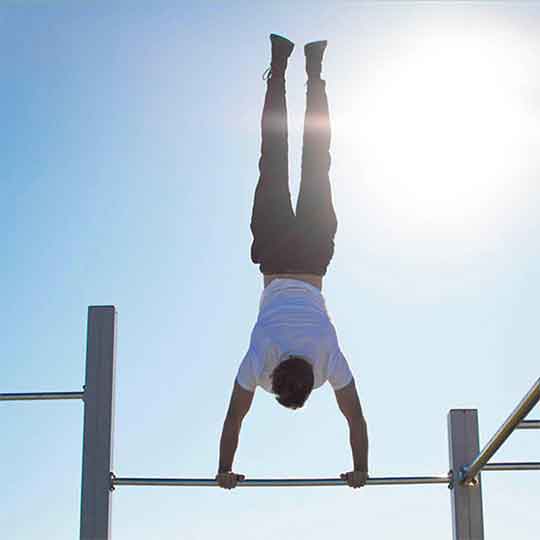
Freestyle calisthenics emphasizes creative combinations of movements and fluid transitions.

Weighted

Weighted calisthenics incorporates additional weights to increase resistance and training intensity.

Since the GaLaBau trade fair in 2018, we have observed a clear trend among our customers: major playground equipment manufacturers, as well as emerging startups, increasingly offer outdoor fitness parks with new equipment and new performance requirements. This development accelerated during the pandemic, as outdoor exercise supports the immune system and lowers infection risks.

Our team has studied this rapidly growing sector in depth and has been a supporting member of the German Calisthenics and Streetlifting Federation since spring 2022.

What Is Calisthenics?

Derived from the Greek words “kalos” (beautiful) and “sthenos” (strength), calisthenics has evolved into its own sport, defined by bodyweight exercises. The discipline originally emerged in dense urban environments in the United States and Russia, where athletes created accessible alternatives to traditional sports infrastructure.

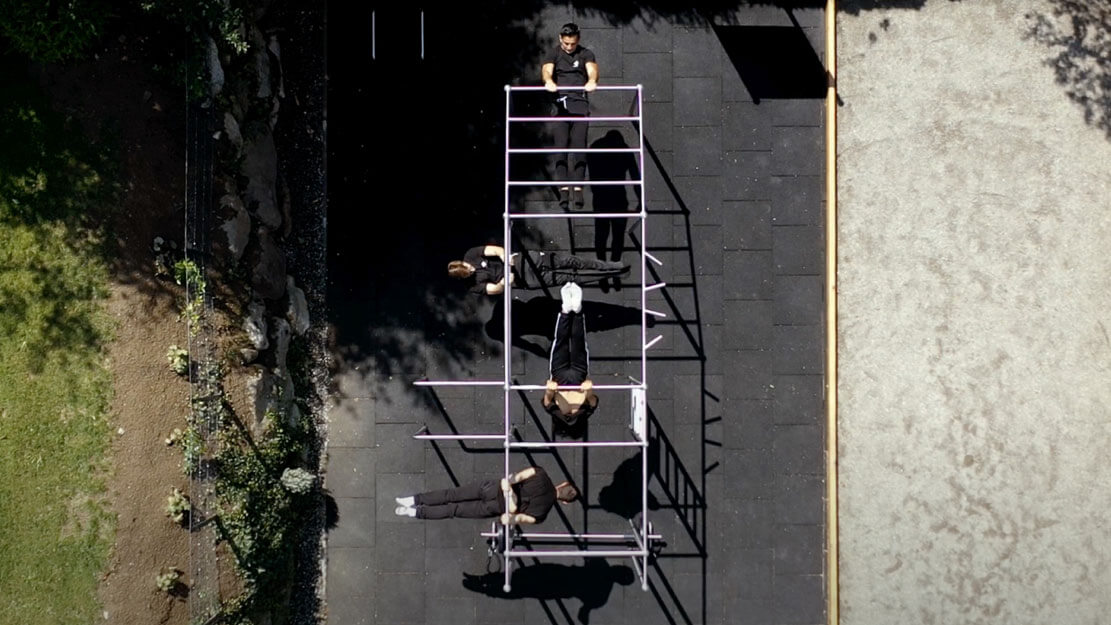
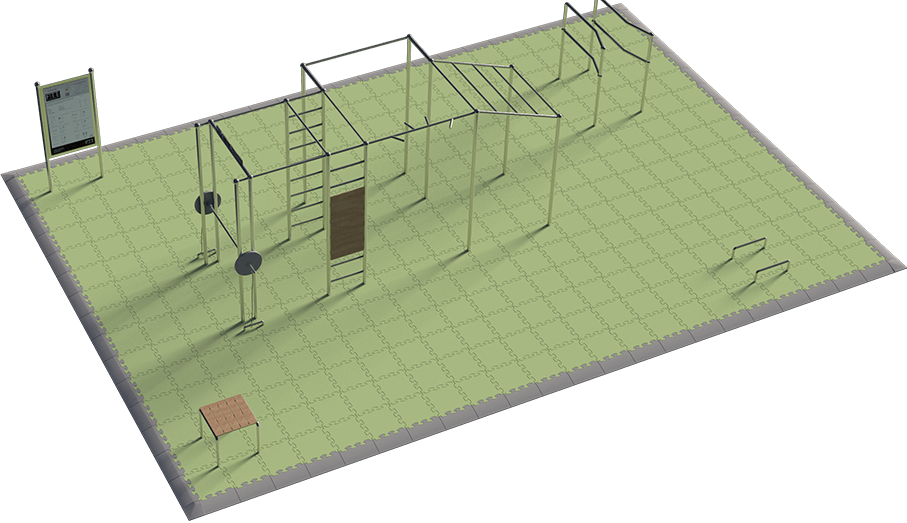
In dedicated calisthenics parks, athletes can perform a surprisingly wide variety of exercises. While many movements are inspired by traditional gymnastics on bars or parallel bars, calisthenics has developed into an urban culture of its own.

Freestyle calisthenics, in particular, blends strength, creativity, rhythm and aesthetics. Athletes often perform choreographed routines, frequently set to hip-hop music popular among younger audiences.

A New Outdoor Sport Movement in the DACH Region

Because calisthenics parks are often built in place of playgrounds, they fall under similar regulatory standards. Safety tiles with TÜV-certified HIC (Head Injury Criterion) values provide impact absorption, injury prevention and remain easy to clean.

Compared to wood chips or sand, rubber tiles allow athletes to train—even in poor weather—without getting dirty, enabling warm-ups, floor work and stretching on a stable surface.

Our Puzzle Mat 3D® has become particularly popular in calisthenics installations in recent years, thanks to its fast installation, lack of required edging and modular structure. These advantages often result in notable cost savings for municipalities and project owners.

Additionally, unlike poured-in-place rubber, individual tiles can be replaced easily—an important benefit for weighted calisthenics, where barbells, dumbbells and plates may cause localized wear. Many customers order spare tiles upfront to replace surface areas exposed to high-intensity training.

The Future of Calisthenics

We are seeing steadily increasing demand. The sport is becoming firmly established in society and gained popularity during the pandemic. Private clients, companies and even organizations such as fire departments are now integrating calisthenics equipment into their training programs.

Municipal requirements vary, as planners must consider not only safety regulations but also whether a park will be used by professional athletes or designed as a multifunctional facility for children, teens and older adults.

We are happy to connect municipalities with the German Calisthenics and Streetlifting Federation or with equipment manufacturers specializing in this field.

Calisthenics Flooring

Gum-tech® is a Supporting Member of the German Calisthenics and Streetlifting Federation

Die Puzzle Mat 3D®
The Ideal Calisthenics Surface

Choose the tile based on the required fall height.

Product Selection

The topic of impact attenuation for outdoor fitness installations is critical and plays an essential role in protecting users. In this context, both the playground standards DIN EN 1176 and DIN EN 1177 as well as the fitness equipment standard DIN EN 16630 apply. We recommend always using the more stringent playground standards DIN EN 1176 / 1177 when calculating fall heights, as it cannot be guaranteed that children will not use the equipment.

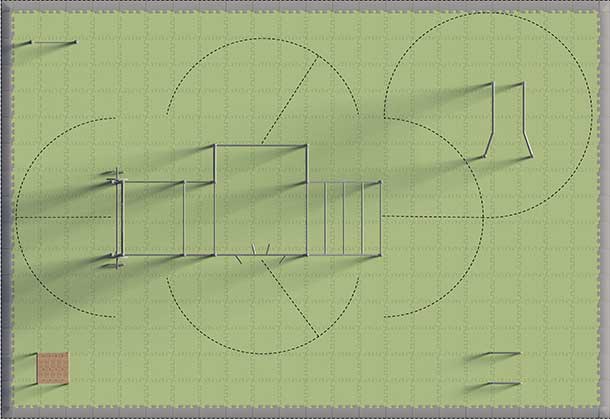
The impact area must be free of obstacles or objects that users could strike in the event of a fall. The size of the impact area depends on the free fall height. The free fall height is defined as the height at which the manufacturer has intended a person to stand or sit on the equipment. The maximum permissible free fall height is 300 cm. Starting from a free fall height of 100 cm, the impact area must be calculated according to the standards. The safety surfacing must be certified for the corresponding fall height.

0
    0
    Review Inquiry List
    There are no products in your inquiry list.Back to Home Page

    Request Document

    Request Document

    Please enter your details. We will get back to you.

    This field is for validation purposes and should be left unchanged.